

🌶️🔥 Kung Pao Noodles That Taste Better Than Your Favorite Takeout
1. Introduction
There’s something magical about the sizzle of garlic and ginger hitting a blazing-hot wok, mingling with the nutty aroma of roasted peanuts and the tangy-sweet-spicy punch of authentic kung pao noodles. This takeout-inspired classic has been transformed in my kitchen into a lightning-fast weeknight hero—rich in flavor, perfectly balanced, and surprisingly easy to replicated at home. Not the soggy, overly sweet, peanut-averse version you often get from delivery.
Using tender bite-sized chicken thighs, crisp snap of bell peppers, and theSignature “battle of textures” (crispy, chewy, smooth), this recipe delivers that deep, complex umami depth you crave. And the best part? You can have it on the table in under 25 minutes with pantry staples. Let’s get cooking!
2. Why You’ll Love This Recipe
- ✅ Ready in 25 minutes – Faster than most delivery, with better quality
- ✅ One-pan wonder – Minimal cleanup, maximum flavor retention
- ✅ Highly customizable – Spice level, protein, and veggies are all up to you
- ✅ Takeaway copycat magic – That perfect balance of la lao (numbing heat) and xi lao (salty-sweet)
- ✅ D Inner-friendly – Freeze well, reheats beautifully, and kids love the crunchy peanuts
3. Ingredient Notes
Quality and balance make or break kung pao chicken noodles. Here’s why each component matters—and how to elevate it.
Chicken: I always use boneless, skinless thighs over breasts. Why? They’re more forgiving, stay juicy under high heat, and absorb the sauce beautifully. If you’re meal-prepping, a doublebatch freezes beautifully.
Dried Chilies: Sichuan dajiao (or Guizhou chilies) give that signature deep-red color and layered heat. If you can’t find them, whole Thai bird’s eye chilies work—just deseed for less heat. Pro Tip: Lightly crush them in the pan first to release oils—don’t fry them into bitter ash!
Sauce: Store-bought kung pao sauce often contains corn syrup or MSG. We’re making ours fresh: dark soy for color and richness, Shaoxing wine for depth (substitute with dry sherry), and Zhenjiang vinegar (or apple cider vinegar) for bright tang—essential for balancing the sweetness.
Noodles: Thin egg noodles or dried spaghetti broken in half work great. Fresh lo mein noodles are ideal—if you’re near an Asian grocer, grab them. If you love bold, saucy noodles, you’ll appreciate how this structure holds up under sauce without turning mushy.
Peanuts: Raw, unsalted peanuts, toasted in the wok until crisp. Pre-roasted salted ones over-salt the dish. I toast them separately in the oven or air fryer for perfect crunch every time.
4. Kitchen Tools You Need
You don’t need a wok to make this—but using the right tools helps replicate that high-heat sear and even cooking.
The T-fal 14-Piece Hard Anodized Nonstick Cookware Set includes a perfect 12” skillet that handles high heat like a champ—and cleans up fast. If you’re outfitting a new kitchen, this set is a must-have.
For ultra-crispy chicken without extra oil, reach for the Compact 6-in-1 Digital Air Fryer by Amazon Basics. I love it for quickly crisping cut-up chicken thighs before tossing into the stir-fry.
And if you love batch-cooking or love the idea of one-pan comfort meals, the Ninja Foodi Smart XL Indoor Grill & Air Fryer Combo is incredible for searing meat and roasting vegetables in tandem.
For serious noodle lovers who want to make fresh lo mein: the Philips 7000 Series Pasta Maker delivers silky-thin noodles in minutes—and it’s shockingly easy for beginners.
5. How to Make Kung Pao Noodles
My step-by-step guide focuses on visual and sensory cues—so you’ll know exactly when you’ve hit perfection.
Phase 1: Prep & Marinate (10 minutes)
Start by cutting chicken thighs into ¾-inch cubes—you want uniform size for even cooking. In a bowl, toss with 1 tbsp soy sauce, 1 tsp Shaoxing wine, 1 tsp cornstarch, and a pinch of white pepper. Set aside 5 minutes while you prep veggies.
Phase 2: Toast the Peanuts (2 minutes)
In a medium skillet over medium heat, toast raw peanuts with 1 tsp neutral oil. Stir constantly until golden brown (about 2 minutes)—they go from creamy to burnt fast! Transfer to a plate. Crispiness is non-negotiable.
Phase 3: Stir-Fry the Chicken (4 minutes)
Heat 1 tbsp oil in your wok or large skillet over high heat until shimmering (almost smoking). Add chicken in a single layer—don’t crowd the pan! Sear 90 seconds per side until deeply golden and just cooked through. Transfer to a clean plate.
Phase 4: Build the Flavor Base (2 minutes)
Reduce heat to medium. Add sliced scallion whites, minced garlic, ginger, and dried chilies. Stir 45 seconds until fragrant—look for the oil to turn vibrant red and shimmer. Do not let garlic burn—it turns bitter.
Phase 5: Sauce & Noodles (3 minutes)
Whisk sauce ingredients (2 tbsp soy, 1 tbsp dark soy, 1 tbsp Shaoxing, 1 tbsp Zhenjiang vinegar, 1 tsp sesame oil, 1 tsp sugar, 1 tsp cornstarch, 3 tbsp water). Pour into the wok, stirring. Return chicken + any juices. Toss in cooked noodles and bell peppers. Stir-fry 2 minutes—the sauce should cling, thicken, and coat everything like a glossy glaze.
Phase 6: Finish (1 minute)
Turn off heat. Fold in toasted peanuts and scallion greens. Give it one last toss—the peanuts should remain crunchy, not soggy.
6. Expert Tips for Success
I’ve made (and ruined) dozens of batches—here’s what separates great from good:
- Prep everything first: Stir-fries move fast. Have noodles cooked, sauce mixed, and veggies sliced before you turn on the heat.
- Go dry with noodles: Undercook by 1 minute—they’ll finish cooking in the wok. Wet noodles release steam and make everything soggy.
- Vinegar is your secret weapon: Add half at the start and half at the end—brightness unlocks the other flavors.
- Don’t overcook peppers: They should stay crisp-tender. Overcooked = mushy texture.
- Double the peanuts: Most recipes skimp, but that nutty crunch is the soul of the dish. I use ⅔ cup, not ½.
7. Variations & Substitutions
This recipe is incredibly adaptable—especially if you have dietary needs or just want variety.
Protein Swaps:
– Shrimp: Add last 2 minutes—don’t overcook!
– Tofu: Use extra-firm, pressed, and cubed. Pan-fry until golden before adding to sauce.
– Beef: Use flank or sirloin, thinly sliced against the grain. Marinate with a splash of baking soda for tenderness.
Vegetarian/Vegan:
– Omit chicken, double mushrooms and zucchini.
– Use tamari instead of soy, and swap Shaoxing for mushroom stock or rice wine vinegar.
Low-Carb:
– Use shirataki noodles or zucchini noodles (add last 30 seconds to avoid sogginess).
If you love noodle variations, check out my honey pepper chicken stir-fry for inspiration!
8. Storage & Reheating
This keeps well—but peanuts lose crunch over time.
Storage:
– Store noodles and sauce separately in airtight containers (try the JoyJolt Airtight Glass Food Storage Set) for up to 4 days.
– Toast peanuts fresh before serving—reheat in an air fryer at 350°F for 2 minutes.
Reheating:
– Stovetop is best: heat wok over medium-high, add noodles, stir-fry 2 minutes.
– Microwave (with cover): 90 seconds on high, stir, 30 seconds more—but expect softer nuts.
Freezing:
– Freeze without noodles or peanuts. Add fresh veggies and noodles when reheating.
9. FAQ
Why are my noodles sticky?
Rinsing cooked noodleswith cold water removes the starch needed to bind sauce. Always drain well and toss with a tsp of oil if prepping ahead.
Can I make this less spicy?
Absolutely. Remove seeds from chilies, use fewer (or only 1 dried chili + ½ tsp crushed red pepper flakes). Or add a splash more honey or a squeeze of lime at the end to balance.
What can I use without Shaoxing wine?
Dry sherry is the closest substitute. For alcohol-free, use 1 tbsp rice vinegar + 1 tbsp water + ¼ tsp sugar.
How do I get that “wok hei” (breath of the wok) flavor?
Use high heat, dry ingredients, and avoid overcrowding. Let your pan get properly hot (test with a drop of water—it should evaporate instantly). The slight char = flavor.
10. Conclusion
This kung pao noodles recipe isn’t just a weeknight rescue—it’s a flavorful escape to a bustling Shanghai street food stall, right in your own kitchen. With the perfect harmony of crunchy, spicy, sweet, and savory, it’s better than any delivery—and you control every ingredient.
Next time, pair it with my one-pan ground beef casserole for a full Sichuan-meets-Midwest dinner spread, or enjoy it solo for pure comfort. Don’t forget the extra chili oil—and a cold glass of Ninja SLUSHi Pro-chilled jasmine tea.
Let me know your twist in the comments—I love seeing your kitchen hacks!
Print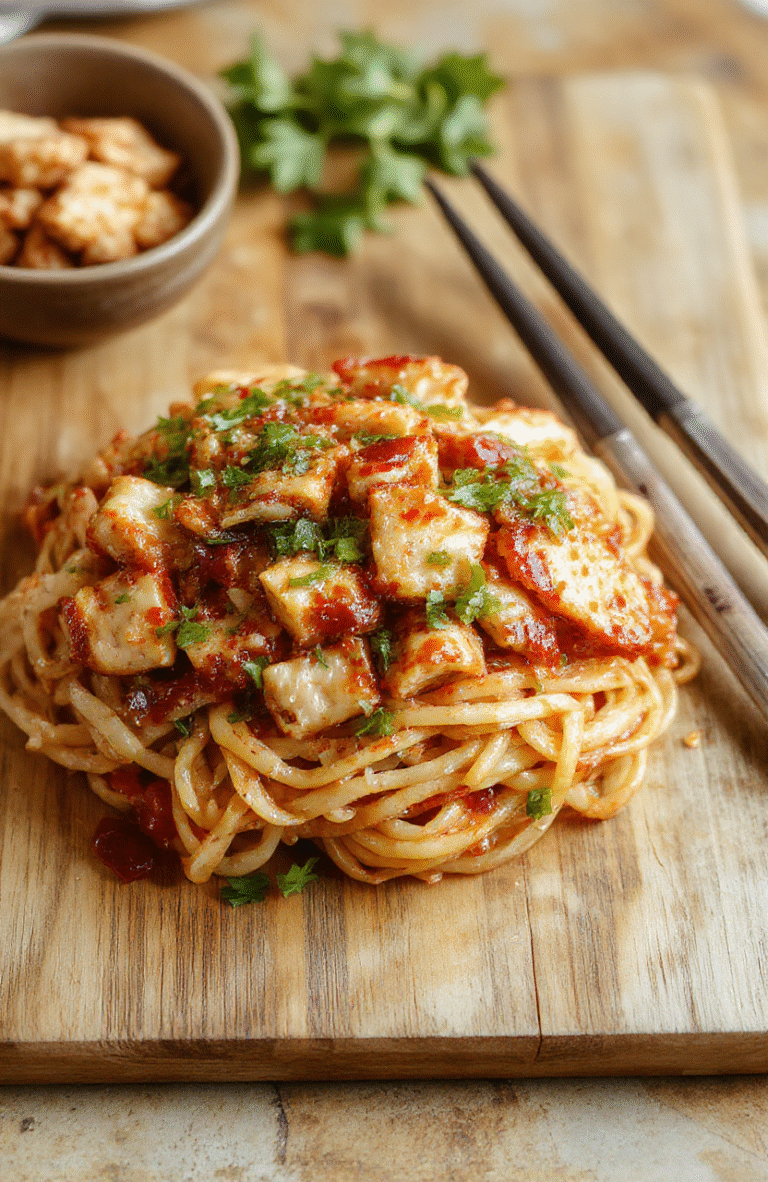
Kung Pao Noodles with Chicken
A spicy, savory, and slightly sweet kung pao noodle dish made with chicken, peanuts, and vegetables. Quick, satisfying, and packed with umami.
- Total Time: 30 minutes
- Yield: 4 servings
Ingredients
- 12 oz rice noodles (lo mein or spaghetti-style)
- 8 oz boneless skinless chicken breast, cut into 1-inch cubes
- 2 tbsp soy sauce
- 1 tbsp Shaoxing wine (or dry sherry)
- 1 tsp cornstarch
- 2 tbsp peanut oil
- 3 garlic cloves, minced
- 1 tbsp fresh ginger, grated
- 2 green onions, sliced (white and green parts separated)
- 1 red bell pepper, sliced
- 1 green bell pepper, sliced
- 1/2 cup roasted peanuts
- 2–3 dried red chilies (or 1 tsp crushed red pepper flakes)
- 1 tbsp zhenjiang vinegar (or apple cider vinegar)
- 1 tsp sesame oil
- 1/2 tsp Sichuan peppercorns, ground (optional, for numbing spice)
- Cooking spray or extra oil for pan-frying
Instructions
- Cook rice noodles according to package directions; drain and toss with 1 tsp oil to prevent sticking. Set aside.
- Meanwhile, toss chicken with 1 tbsp soy sauce, 1 tbsp Shaoxing wine, and 1 tsp cornstarch. Let marinate 10 minutes.
- In a small bowl, whisk together 1 tbsp soy sauce, 1 tbsp Shaoxing wine, 1 tbsp zhenjiang vinegar, 1 tsp sesame oil, 1/2 tsp cornstarch, and 2 tbsp water. Set aside.
- Heat 1 tbsp peanut oil in a large wok or skillet over medium-high heat. Add chicken and stir-fry until golden and cooked through (3–4 minutes). Remove and set aside.
- Add remaining oil to the same pan. Add garlic, ginger, white parts of green onions, and chilies. Stir-fry 30 seconds until fragrant.
- Add bell peppers and stir-fry 2 minutes until crisp-tender.
- Return chicken to the pan. Pour in the sauce mixture and stir well. Cook 1 minute until glossy and slightly thickened.
- Add cooked noodles and peanuts. Toss to coat evenly. Remove from heat, stir in green onion tops and Sichuan peppercorns (if using).
- Divide into bowls and serve immediately with extra red pepper flakes or chili oil on the side.
Notes
- For a vegetarian version, swap chicken for firm tofu or tempeh, and Use tamari instead of soy sauce.
- Toast Sichuan peppercorns in a dry pan before grinding for extra aroma.
- Rice noodles overcook easily—cook al dente and rinse with cold water if not serving immediately.
- Prep Time: 15 minutes
- Cook Time: 15 minutes
- Method: Stir-fry
- Cuisine: Sichuan Chinese
- Diet: None
Nutrition
- Serving Size: 1 bowl (approx. 2 cups)
- Calories: 420 Kcal
- Sugar: 4 g
- Sodium: 780 mg
- Fat: 14 g
- Saturated Fat: 2 g
- Unsaturated Fat: 10 g
- Trans Fat: 0 g
- Carbohydrates: 62 g
- Fiber: 3 g
- Protein: 21 g
- Cholesterol: 45 mg